There is no winner between these two materials. Acetate wins on color variety, design freedom, and brand identity. TR90 wins on weight, flexibility, and impact resistance. The choice depends on what your brand sells — and to whom.
Acetate and TR90 are not two versions of the same plastic. They belong to different material families.
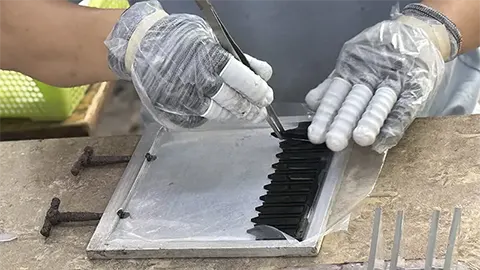
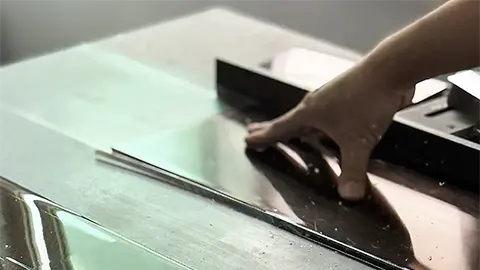
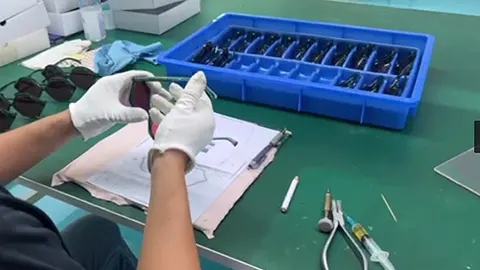
Acetate's raw material — cellulose acetate — is plant-based, made from cotton linter or wood pulp. The pellets are melted into a thick syrup, colored, extruded, and pressed into sheets in various colors and patterns. Eyewear factories then cut, heat-form, polish, and hand-finish through dozens of steps before a finished frame comes out.
TR90 is a nylon-based thermoplastic, usually PA12. It's injection-molded. Molten pellets are shot into a steel mold, the frame comes out in one piece, then it's trimmed and finished. The process is closer to how car parts are made.
That difference drives everything else.
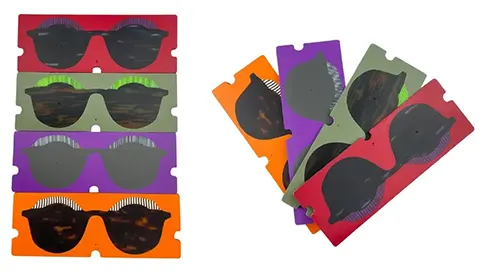
Acetate's color is built into the material, not painted on. It runs through the entire sheet. You can polish it repeatedly and the color won't fade. Clear, opaque, tortoiseshell, marble, laminated — almost infinite variation.
TR90 colors differently. Pigment is mixed into the pellets before injection. You get solid colors and simple gradients. Tortoiseshell? Translucent amber? TR90 can't do it.
TR90's injection process allows shapes acetate can't achieve — ultra-thin profiles, wrap-around geometry, one-piece bridges and rims. That's why high-performance ski goggles use TR90.
But for fashion-driven eyewear, acetate's vivid color and post-processing finish are impossible for TR90 to match.
One warning: don't pick TR90 just because the per-unit price looks lower. At 300 pairs, the mold fee spread across the run makes it more expensive. Conversely, a brand using acetate for ski goggles will run into deformation at high altitude.
Acetate gives you color and personality. TR90 gives you performance and consistency.
TR90 frames typically weigh 8–10 grams. Comparable acetate frames weigh 22–25 grams — TR90 is more than 50% lighter. For all-day wear or high-intensity sports, the difference shows.
TR90 bends and springs back. Hit by a ski pole, dropped on ice, sat on — it returns to shape. Acetate cracks under the same conditions. That's why TR90 dominates ski goggles, cycling glasses, and kids' frames.
But that flexibility has a cost: TR90 loosens over time. Acetate stays fitted until you deliberately bend it.
Acetate deforms above roughly 60°C — leave a pair on a car dashboard in summer and you'll see it. TR90 doesn't mind that heat.
For premium fashion brands, though, weight and rigidity are selling points. A heavier acetate frame signals quality in the buyer's hand — it has presence, and it holds its shape on the face. That's why luxury eyewear brands still default to acetate.
Unit price tells half the story. Mold cost tells the other half.
TR90 needs a steel injection mold — a basic single-cavity mold usually runs $4,000–$8,000. That's fixed cost. At 300 pairs, the per-unit amortization is heavy. At 3,000 pairs, the same mold spreads across a much smaller amount.
Acetate doesn't need that kind of tooling. Factories cut from sheet, minimal fixtures. The trade-off is labor — more hands-on time per frame, so wholesale unit price is higher.
At 300 pairs, acetate is almost always cheaper. At 3,000 pairs, TR90 starts to win on per-unit economics. The break-even point depends on your mold design and the factory, but usually lands between 800 and 1,200 pairs.
If your first collection starts at 300 pairs, acetate is the safer financial choice — more design freedom, no mold commitment, and you can change shapes in the next order. Once a style proves itself and drops to 2,000+ pairs, TR90 is worth the mold investment.
Most buyers don't realize this until they see a finished sample: acetate can be spliced before the frame is formed. We call it splicing.
A spliced acetate frame is made from separate pieces — different colors, different textures — cut and bonded before forming. After curing and polishing, the seams disappear. The frame looks like it was born that way.
Why does it matter? Because it changes what you can sell. Solid-color frames compete on shape and price; spliced frames compete on identity. The color combination is the product.
The technical difficulty is real. Acetate holds moisture — without pre-drying, it shrinks during processing. We pre-bake sheets at around 60°C before splicing to stabilize dimensions, then use solvent-based adhesive to soften the surfaces so the two pieces fuse. Then come forming, tumbling, and multi-stage polishing.
Factories that don't do this often hit three problems:
Batch mismatch — sheets that looked identical on the shelf shift color after bonding and polishing
Misaligned seams — a 0.2mm offset invisible on the rough blank becomes the first thing a buyer sees after polishing
Polish burn-through — too much heat at the bond line softens the joint; QC rejects it outright
In our Shenzhen Longgang workshop, a spliced frame passes through six to eight hand stages before final inspection. Over 15 years of acetate splicing experience has made different color combinations stable and reliable. If you're planning a color-differentiated collection, take a look at our custom spliced acetate sunglasses.
Match the material to the customer — not the other way around.
Choose acetate if:
Your brand sells on design, color, and identity
Your first order is 300–500 pairs
You want tortoiseshell, translucent, or spliced colorways
Retail price is above $80
Your customers care how the frame feels in hand
Choose TR90 if:
Your brand runs a performance or sports line
Single styles start at 1,000+ pairs
You need extreme lightweight and impact resistance
Retail price is below $80
Your customers care about weight and durability more than color
There's a third option: use both. We've seen brands run acetate for fashion lines and TR90 for sports or kids' lines. Different materials, same brand, different customers — that's not a compromise, it's a product strategy.
We've been making acetate frames since 2010, including the splicing work most factories won't take on. Send us your design brief — talk to our OEM/ODM team, or contact us directly. MOQ from 300 pairs, 45–60 day lead time, and an honest answer on what your design can and can't do in each material.