OEM eyewear manufacturing turns your design brief into a production-ready frame through sampling, material approval, tooling, production, QC, and packing. At Liangcai Creative, MOQ is 300 pairs and lead time is 45–60 days after sample sign-off. Here is how the process actually runs.
OEM means we build the frame around your design, not around our stock mold. That changes the work. You are not choosing from a catalog and adding a logo. You are approving dimensions, material, hinge, lens, color, and packaging.
The main stages:
Design brief and tech pack review
Material and construction feedback
Sample development and approval
Production tooling and material prep
Frame production and assembly
QC, packing, and shipping
ODM is different. ODM starts from an existing frame shape, then changes color, logo, and packaging. It is faster. It is also less exclusive. If you need the full breakdown, our custom OEM/ODM eyewear services page explains both paths.
The first mistake we see? A brand sends a mood board and expects a quote. A mood board is not a spec. We need dimensions, reference samples, target material, and lens type before we can give a real number.
Sampling is where the project either gets solid or gets expensive. In our factory, the first sample usually takes 10–15 business days after the brief is clear. If the design needs new tooling, add more time.
We ask for five things before sampling:
Frame drawing or reference sample with measurements
Material direction: acetate, spliced acetate, titanium, or acetate + metal
Lens type and tint
Hinge and hardware preference
Logo and packaging plan
Vague input creates vague samples. A client once sent a photo of a vintage frame and asked for "same but modern." We spent two rounds guessing the temple length and bridge width. Once they sent a physical reference, the third sample was right. That cost them three weeks. Not the factory's fault.
Good sampling does not mean unlimited revisions. It means clear approval at each step. Approve the shape. Approve the material. Approve the color. Approve the hinge. Then move to production.
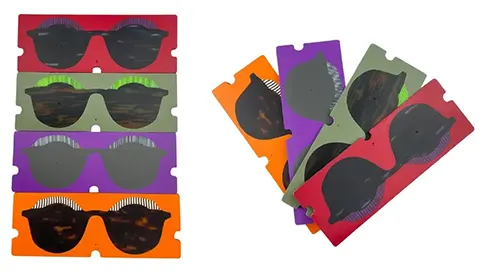
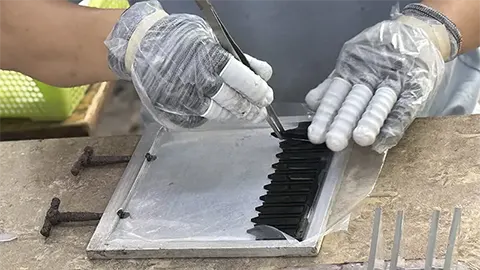
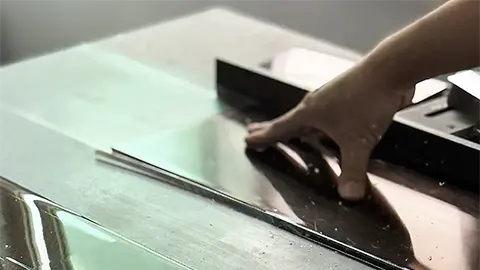
Splicing is the part of OEM work that separates a factory with hand skills from one that only runs single-color blocks. A spliced acetate frame is built from separate acetate pieces that are cut, bonded, cured, shaped, and polished. The goal is a frame that looks like one piece.
Why does this matter for OEM? Because your design may need color blocking, layered patterns, or material contrast that a single acetate sheet cannot produce. A standard acetate frame might move through 3–4 main production stages. A spliced frame can pass through six to eight hand stages.
The risks are specific:
Acetate lots can shift color after bonding
A 0.2 mm seam misalignment shows after polishing
Different acetate sheets can shrink at different rates
Too much polishing heat can soften the bond line
That is why we keep approved spliced samples on file and check seam alignment, color match, and hinge torque on every frame. If you want to see the handwork, watch how spliced acetate frames are made.
Compared to standard single-color acetate, spliced acetate goes through more stages (6–8 vs 3–4), delivers a layered and recognizable visual result, and shifts the QC focus from surface and hinge to seam, color lot, and bond line. MOQ stays the same at 300 pairs. Single-color is best for core styles; spliced acetate is best for signature styles.
Production starts after deposit and approved samples. The 45–60 day lead time covers material prep, frame production, assembly, QC, and packing. It does not cover sampling or shipping transit.
A realistic OEM timeline:
Sampling and approval: 2–3 weeks
Material prep and production: 3–5 weeks
Assembly, QC, and packing: 1–2 weeks
Shipping: depends on method and destination
If you need the frames for a spring launch, start in the fall. We see brands approve samples in December and ask for February delivery. Sometimes it works. Often it does not.
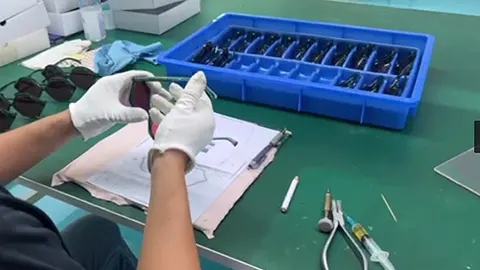
QC should be built into the process, not added at the end. For acetate frames, we check surface finish, color consistency, hinge function, and lens fit. For spliced frames, the bond line gets extra attention. For titanium optical frames, we check welding points and temple alignment. A third-party inspection can be booked for larger orders.
Packing is part of manufacturing. If your custom box arrives late, the frames sit in our warehouse. That delays your launch and adds cost. Confirm case, pouch, cloth, and box specs before production starts.
The smoother OEM projects share the same preparation. They have a clear frame, a target price, and a decision-maker who can approve samples fast.
Prepare this before you ask for a quote:
A tech pack or reference sample with measurements
Material and color direction
Lens, hinge, and logo details
Packaging artwork and specs
Target quantity: 300 pairs, 500 pairs, or more
Target launch date
Do not hide your budget. We are not here to drain it. We are here to tell you what is possible at 300 pairs and what needs 1,000 pairs. That conversation saves months.
OEM eyewear manufacturing works best when the brand treats the factory as a production partner, not a vending machine. You bring the market. We bring the process, the handwork, and the QC. If you are ready to build a custom frame line, contact our team and we will review your brief, confirm MOQ from 300 pairs, and map a 45–60 day production plan.